Contact Us
  Home / /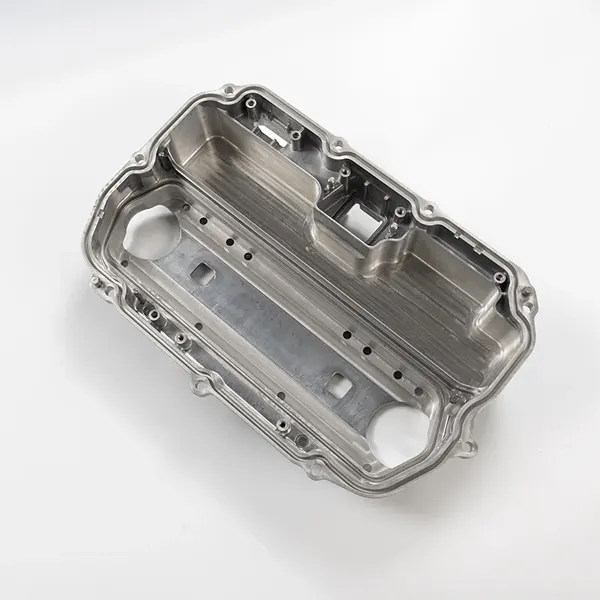


Engine Valve Cover Manufacturing By Die Casting Process
First Mold was approached by an automotive customer in Mexico to manufacture engine valve covers for their vehicles. The customer required high-quality, cost-effective parts with a focus on material performance and surface finish, essential for reducing vehicle weight and improving fuel efficiency.
- Material: Aluminum Alloy
- Mold Type: Die Cast Mold
- Application Industry: Automotive
- Surface Treatment: Powder Coating
- Tolerance: ±0.1 mm
- Production Volume: 50,000 units per year
 Get Free Quote


At KT, we specialize in precision die casting solutions for complex automotive components, supported by an integrated manufacturing system covering tooling design, casting production, machining, and full inspection. With advanced HPDC capability and engineering-driven process optimization, we are able to support both functional prototyping and stable mass production for critical engine parts.
The customer required engine valve covers made from AlSi10Mg, a lightweight yet strong aluminum alloy. This material choice was essential for reducing the overall weight of the vehicle, which helps improve fuel efficiency. The parts had to have a smooth, corrosion-resistant surface finish, and the precision tolerance was set at ±0.1mm. The annual production volume was estimated at 50,000 units, with the customer expecting competitive pricing without compromising quality.
Requirements For Engine Valve Covers Manufacturing
- Material: Lightweight yet strong aluminum alloy (AlSi10Mg) to reduce vehicle weight and improve fuel efficiency.
- Surface Finish: A smooth, corrosion-resistant surface with a tolerance of ±0.1mm.
- Production Volume: 50,000 units per year.
- Cost Efficiency: Competitive pricing while maintaining high quality.
Manufacturing Process
- Design Review and Tooling Development:
Upon receiving the customer’s design, First Mold’s engineering team conducted a thorough review to ensure the part could be manufactured efficiently. Potential issues like thin wall sections and complex geometries were identified, which could have led to casting defects. A customized die was developed, incorporating optimized gating and venting systems to improve material flow and minimize porosity, ensuring a smoother casting process. - Die Casting Process:
- Die Preparation: The mold was preheated to 200°C to avoid thermal shock and ensure uniform material flow.
- Casting: Molten AlSi10Mg aluminum alloy was injected into the mold cavity at a pressure of 1,500 bar to ensure thorough filling.
- Cooling and Ejection: The valve covers were cooled and solidified in about 30 seconds, after which they were automatically ejected from the mold.
- Finishing and Quality Control:
After casting, the valve covers went through various finishing processes such as trimming, shot blasting, and machining. To enhance corrosion resistance and improve aesthetics, a high-quality powder coating was applied. Rigorous quality control checks were implemented at various stages of the manufacturing process:- Dimensional Inspection: Coordinate measuring machines (CMM) were used to verify the accuracy and tolerance of the valve covers.
- X-Ray Inspection: This was conducted to detect any internal defects and ensure the integrity of the parts.